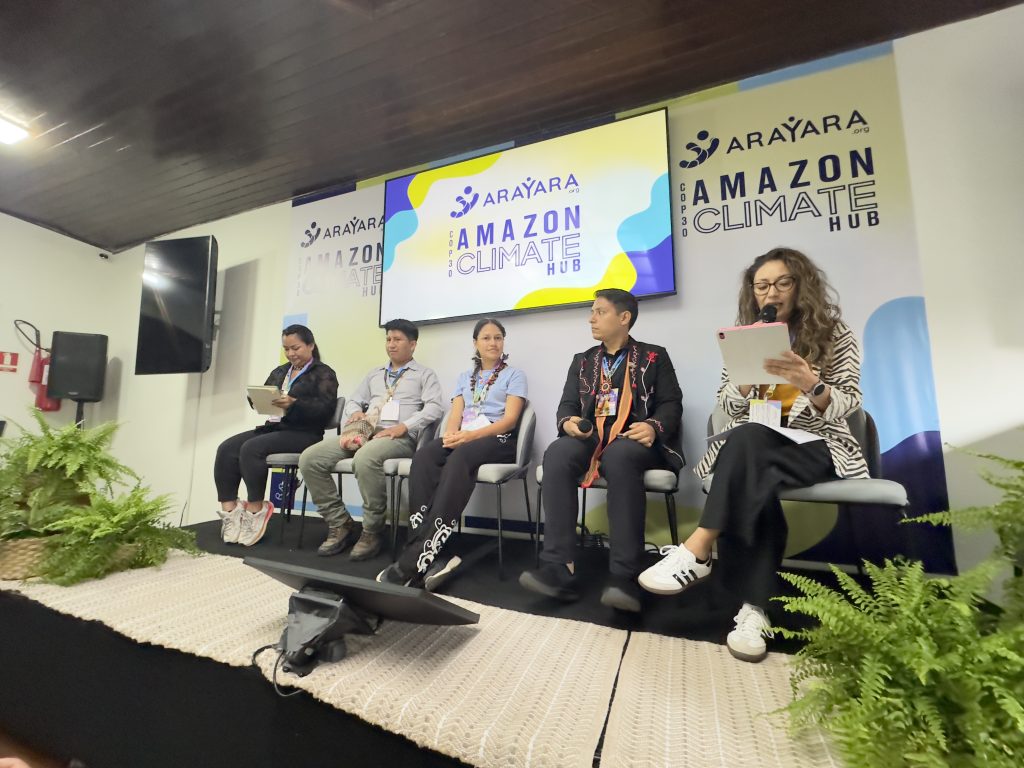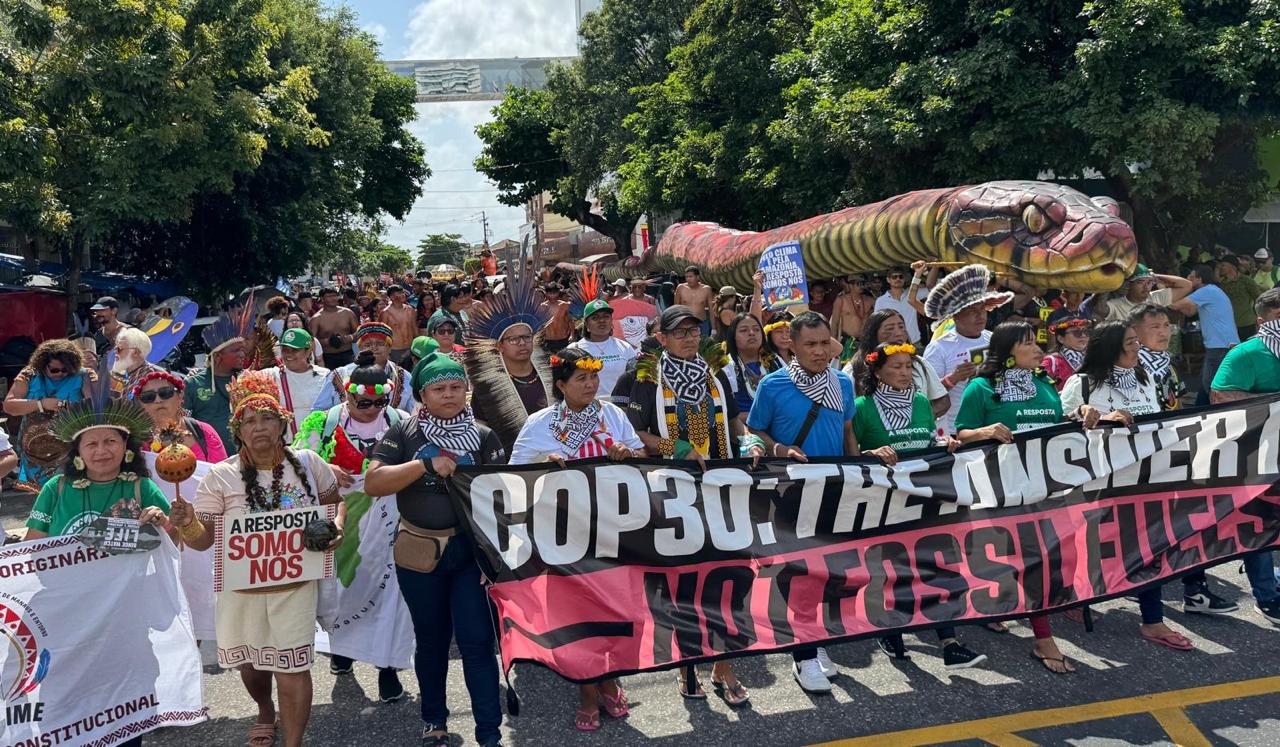
The Amazon Sacred Headwaters Alliance delegation arrived at COP30—held from November 11 to 22, 2025, in Belém, Brazil—carrying the voices and proposals of 30 Indigenous nations and peoples of Ecuador and Peru. Though the summit did not deliver decisions commensurate with the scale of our global climate emergency, the strength, coordination, and presence of our peoples helped drive some noteworthy advances throughout the negotiations.
COP30, the first UN climate conference held in the heart of the Amazon, carried high expectations. Many hoped it would finally place the Amazon biome at the center of global climate action. Yet the final “Global Mutirão” decision excluded essential commitments to stop and reverse deforestation by 2030, commitments already recognized in paragraph 33 of the Global Stocktake from COP28 in Dubai, and avoided any reference to a global transition away from fossil fuels. This omission was a missed opportunity and reinforces the urgency of advancing solutions from our territories.
Even so, collective efforts by Indigenous organizations and civil society secured important gains for the Indigenous agenda, including:
- Historic recognition of Indigenous Peoples in Isolation and Initial Contact (PIACI) within the Just Transition Work Programme, a crucial step for guaranteeing their rights.
- Commitments by key climate funds –Green Climate Fund and the Tropical Forest Forever Facility, to provide direct access to climate funds to indigenous peoples who are the ones who protect the forests, advancing a long-standing demand.
- The TFFF has committed to allocate at least 20 percent of its resources to Indigenous peoples.
- References to Indigenous rights, territories and knowledge systems in the final text, even if still lacking the operational decisions needed for meaningful implementation.
On the political front, Colombia elevated the ambition of the region by promoting the Declaration for a Transition Away from Fossil Fuels, the latter supported by more than 35 countries.
Although these initiatives were not incorporated into the final text, they set a significant political precedent. The movement to phase out fossil fuels is becoming unstoppable.
COP30 also witnessed historic Indigenous participation, with more than 5,000 Indigenous representatives traveling to Belém. For us, this marks a major step toward a stronger, more coordinated Indigenous presence within global climate governance.
Against this backdrop, our Alliance advanced proposals for the permanent protection of the Amazon and the strengthening of Indigenous wellbeing economies. Our delegation, comprising leaders, women leaders, youth, and technical team members, carried a clear message: there is no just transition without living territories and without the indigenous peoples who have stewarded the Amazon for millennia.
A key focus of our delegation was the #LifeZones campaign, calling for the recognition of essential territories for climate stability as fossil-fuel-free zones and for declaring the Amazon the world’s first Life Zone. Throughout COP30, we continued gathering petition signatures that will be presented to Amazonian governments.. Durante la COP30, avanzamos en la recopilación de adhesiones que se presentarán a los gobiernos amazónicos.
We also launched the Amazon Sacred Headwaters Bioregional Fund, a mechanism designed to mobilize long-term, direct, and transparent financing for our territories. Developed through a participatory process, the Fund reflects the priorities of our communities and strengthens our capacity to advance protection, restoration, and Indigenous forest-based economies.
The leadership of Amazonian youth was decisive. From the Amazonian Youth Manifesto to intergenerational dialogues on the rights of nature, young leaders showed that they are not just the future, they are leading now, renewing narratives, sustaining agendas, and defending life with clarity and courage.
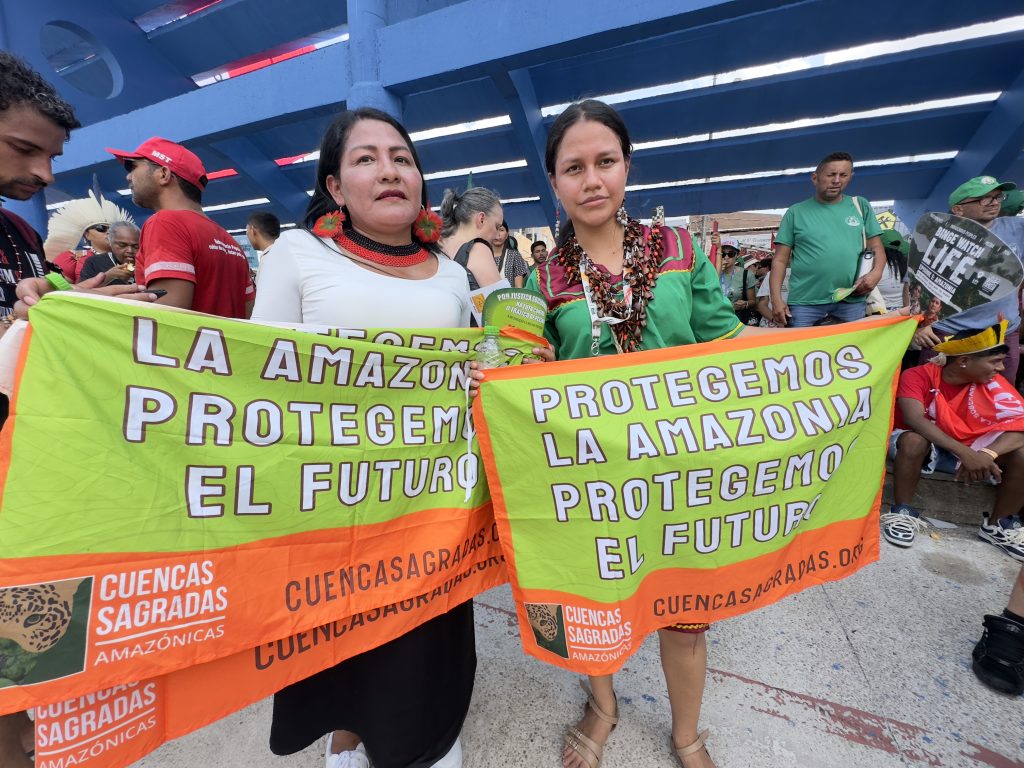
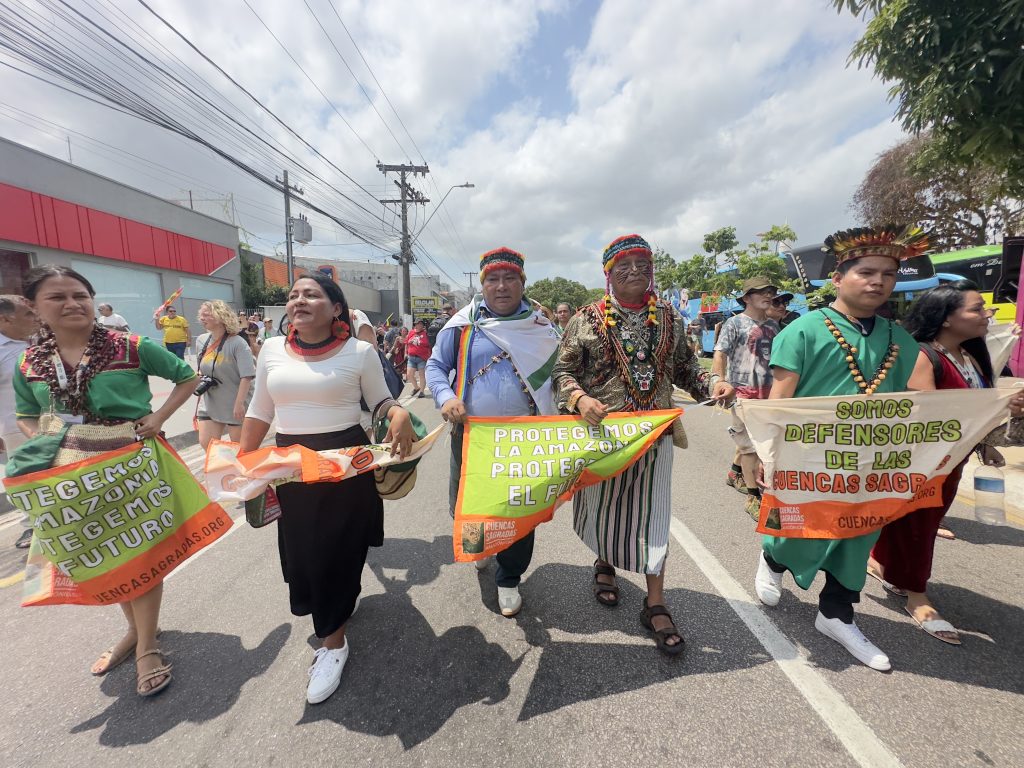
In the streets of Belém, we joined the We we part of the climate and indigenous peoples mobilizations Global March and the Indigenous Peoples March, massive mobilizations calling for climate justice, territorial protection, defense of water, and an Amazon free from fossil fuels. At a COP where our leaders failed to take on the root causes of the climate crisis, indigenous peoples presented clear solution pathways that climate action must follow.
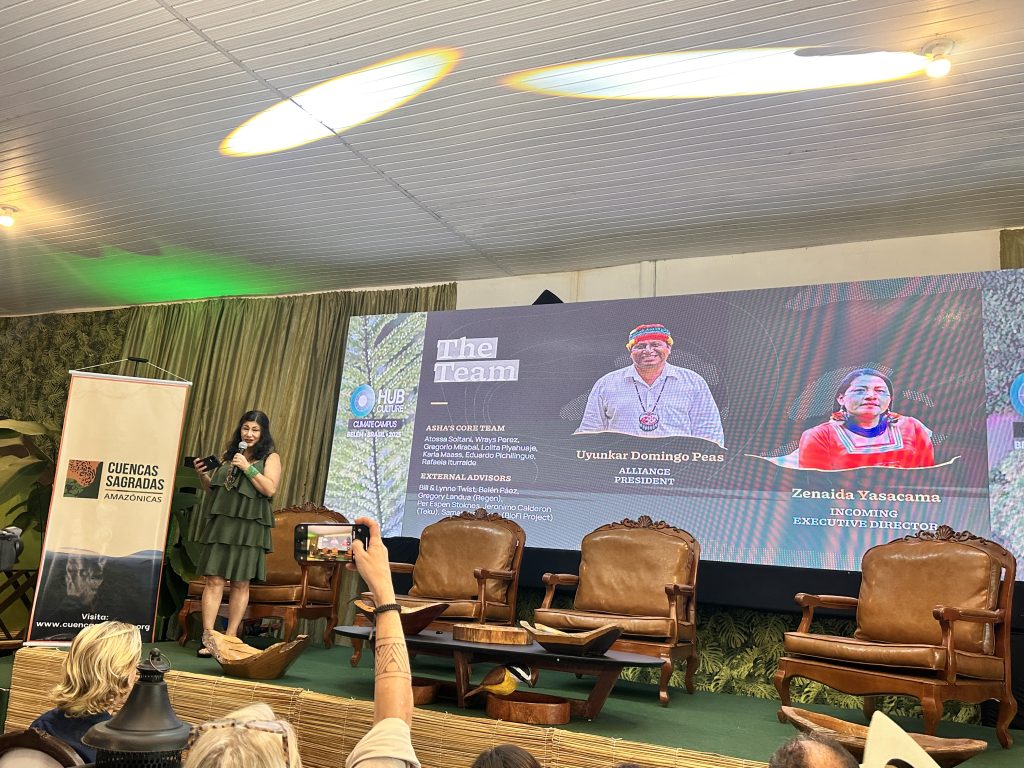
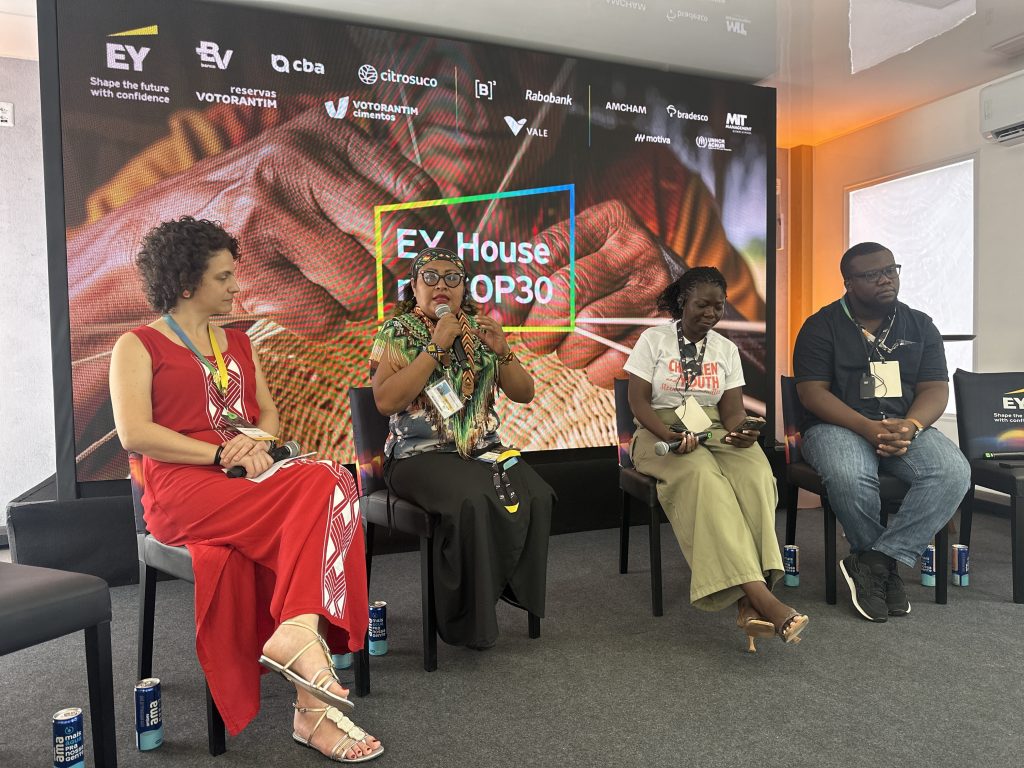
Our Alliance was also highly active in the media, interviews, and high-level panels and dialogues, bringing the voices of our territories to the international stage. We joined Amazonia Calling, a global coalition that delivered the Political Declaration of the Indigenous Peoples of the Amazon Basin and All Brazilian Biomes for COP30. In this context, our president, Uyunkar Domingo Peas, addressed the press, reinforcing the call for living territories, direct financing, and an Amazon free from fossil fuels.
Although COP30 did not produce the global commitments needed to address the Amazonian crisis, it left us with a powerful certainty: our peoples are already showing the way forward. The strength of our governance, the leadership of our youth, our territorial coordination, and tools such as the Bioregional Fund demonstrate that a just transition is beginning in the Amazon.
From Ecuador and Peru, our Alliance reaffirms its commitment to living territories, self-determination, and a future where the flourishing of life, and the peoples who defend it, are at the center.
Some pictures of our delegation: