

“The Sacred Headwaters Amazon Alliance is working on the creation of a financing mechanism to enable direct access to funding for Indigenous peoples and to protect 35 million hectares of forest.”
By Karla Maass
In the face of the convergence of the climate crisis, biodiversity loss, and growing socioeconomic tensions, it is essential to consolidate and sustain the systems that ensure collective well-being and the preservation of life on Earth. This urgency becomes particularly evident in the Amazon, one of the planet’s major ecological systems, whose integrity is decisive for global climate stability, hydrological cycles, and biocultural diversity.
Various scientific assessments indicate that the Amazon biome is undergoing an increasing process of degradation, marked by deforestation, fires, the expansion of extractive activities, and the impacts of climate change. These pressures weaken its ecological integrity and push it toward critical thresholds of ecosystem transformation, potentially reaching a point of no return.
In this context, the role of Indigenous peoples has been decisive. Scientific evidence shows that their territories have lower rates of deforestation and that approximately 80% of the world’s biodiversity is concentrated within them, positioning Indigenous peoples as central actors in forest protection and in maintaining the ecological stability of the Amazon.
However, international funding that reaches Indigenous peoples directly remains marginal, estimated at between 1% and 3% of global climate and environmental financing. This figure reflects the limited share of resources that effectively reach Indigenous territorial structures, even in a context in which governments and international philanthropy have announced specific commitments to strengthen territorial rights and Indigenous leadership in forest protection. These include Forest Tenure Pledge launched at COP26 for USD 1.7 billion (2021–2025) and renewed at COP30 with USD 1.8 billion for the period 2026–2030. Here, a structural contradiction becomes clear: those who play a decisive role in protecting forests receive only a fraction of the resources allocated to their conservation.
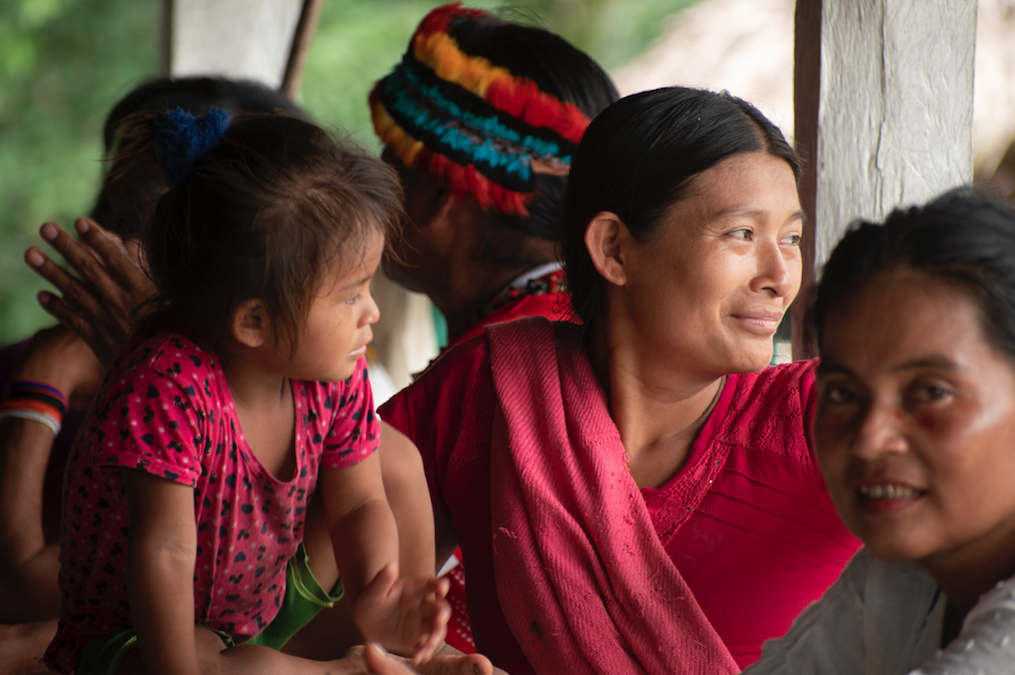
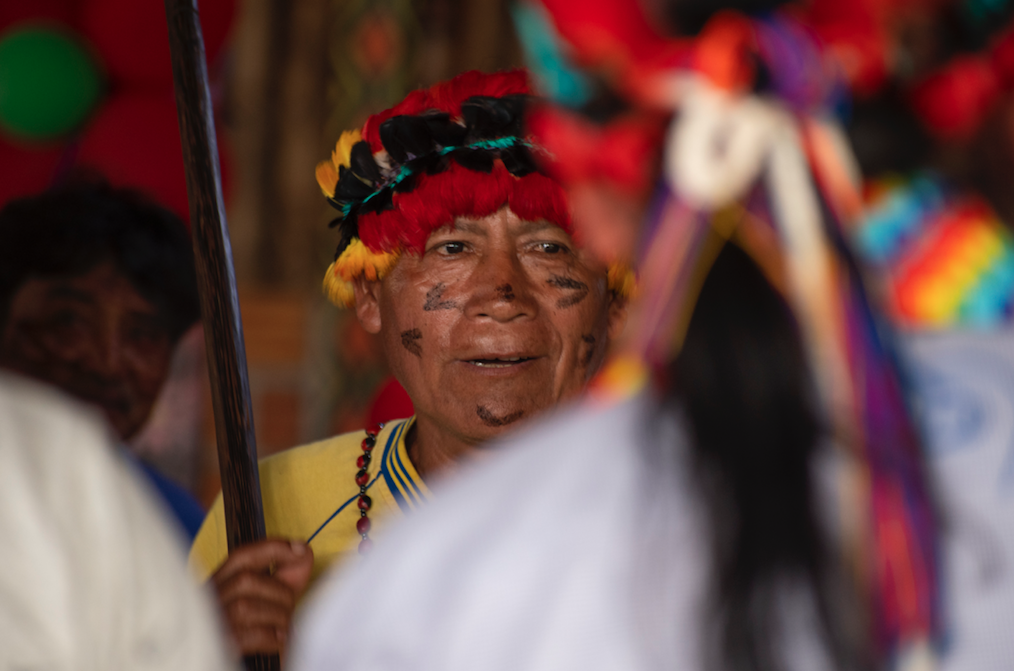
In recent years, a global debate has emerged around the urgency of ensuring direct access to funding for Indigenous peoples and local communities. In various forums and multilateral financial institutions, including those linked to climate and biodiversity finance, explicit references to direct access to funding have been incorporated thanks to the advocacy of Indigenous organizations and their allies. In this context, the Global Environment Facility (GEF), through the Global Biodiversity Framework Fund (GBFF), established in 2023 to support the implementation of the Kunming-Montreal Global Biodiversity Framework, includes an explicit objective of allocating at least 20% of its resources to actions led by Indigenous peoples and local communities. Likewise, new financial instruments have incorporated specific windows for Indigenous peoples, such as the Tropical Forests Forever Facility (TFFF), established at COP30 and conceived as a permanent fund to support the conservation of tropical forests worldwide. The facility foresees allocating at least 20% of its resources to Indigenous peoples and local communities, in recognition of their role in forest protection.
Nevertheless, structural barriers persist that hinder direct access by Indigenous peoples to these resources, including financial, administrative, and technological requirements. It is crucial that all parties commit to a joint process that requires, on one hand, capacity strengthening and, on the other, an exercise of openness and trust toward those who have demonstrated the effectiveness of their actions in protecting their territories. It will be essential to recognize the legitimacy of Indigenous governance structures and mechanisms as entities capable of ensuring concrete, measurable, and verifiable results, as well as sound resource management.
In this context, it is essential to create territorially legitimate financial architectures that combine technical solidity, transparency, monitoring mechanisms, cultural coherence, and Indigenous governance. For this reason, the Sacred Headwaters Amazon Alliance, composed of 28 Indigenous and civil society organizations, has been working since 2024 on the design of a bioregional financial mechanism that channels direct funding to Indigenous peoples to protect 35 million hectares of Amazon forest, as well as to support territorial defense, Indigenous economies, the implementation of Life Plans, and Buen Vivir. This path is being built from the ground up, through listening, dialogue, and co-creation, placing Indigenous governance as the guiding axis and foundation of the design.
More than an additional fund, this mechanism is an innovative tool that channels resources toward the integral regeneration of a specific territory, its forests, rivers, cultures, and local economies, rather than financing isolated projects. Unlike other funds, Bioregional Financial Mechanisms adopt a long-term and multi-capital perspective, simultaneously valuing ecological integrity, social well-being, and economic viability. They articulate integrated investment portfolios aimed at restoring ecosystems, strengthening territorial resilience, and activating regenerative bioeconomies at the landscape scale.
Finally, it is crucial that if the international community recognizes the role of Indigenous peoples in protecting biodiversity and climate stability, the financial system responds accordingly. Expanding commitments is not enough; it is essential to open specific, flexible, and relevant funding windows that align with Indigenous governance and organizational realities. It is also important to ensure that financial accounting is in dialogue with territorial practice and that financial standards do not displace priorities defined from within the territories.
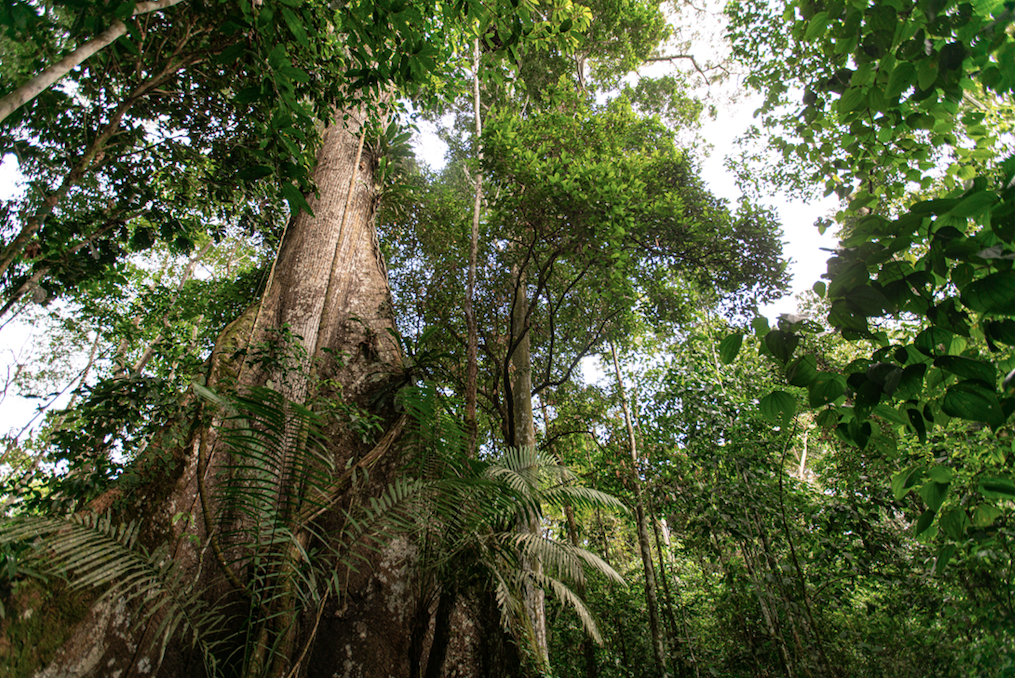
When financing is aligned with the living systems of standing forests, it ceases to be an abstract flow of capital and becomes a concrete tool for sustaining life, strengthening territorial justice, and safeguarding the Amazon for future generations.
References
- Science Panel for the Amazon (2021). Amazon Assessment Report. United Nations Sustainable Development Solutions Network. https://www.theamazonwewant.org
- IPBES (2019). Global Assessment Report on Biodiversity and Ecosystem Services.
- Forest Tenure Funders Group (2022). Funding Indigenous Peoples’ Tenure and Forest Management in 2020–2021.
- Global Biodiversity Framework Fund (GBFF). 2023.
- Tropical Forests Forever Facility (TFFF): Concept Note presentada en la COP30. Presidency of COP30 / Ministério da Fazenda, Brasil.