
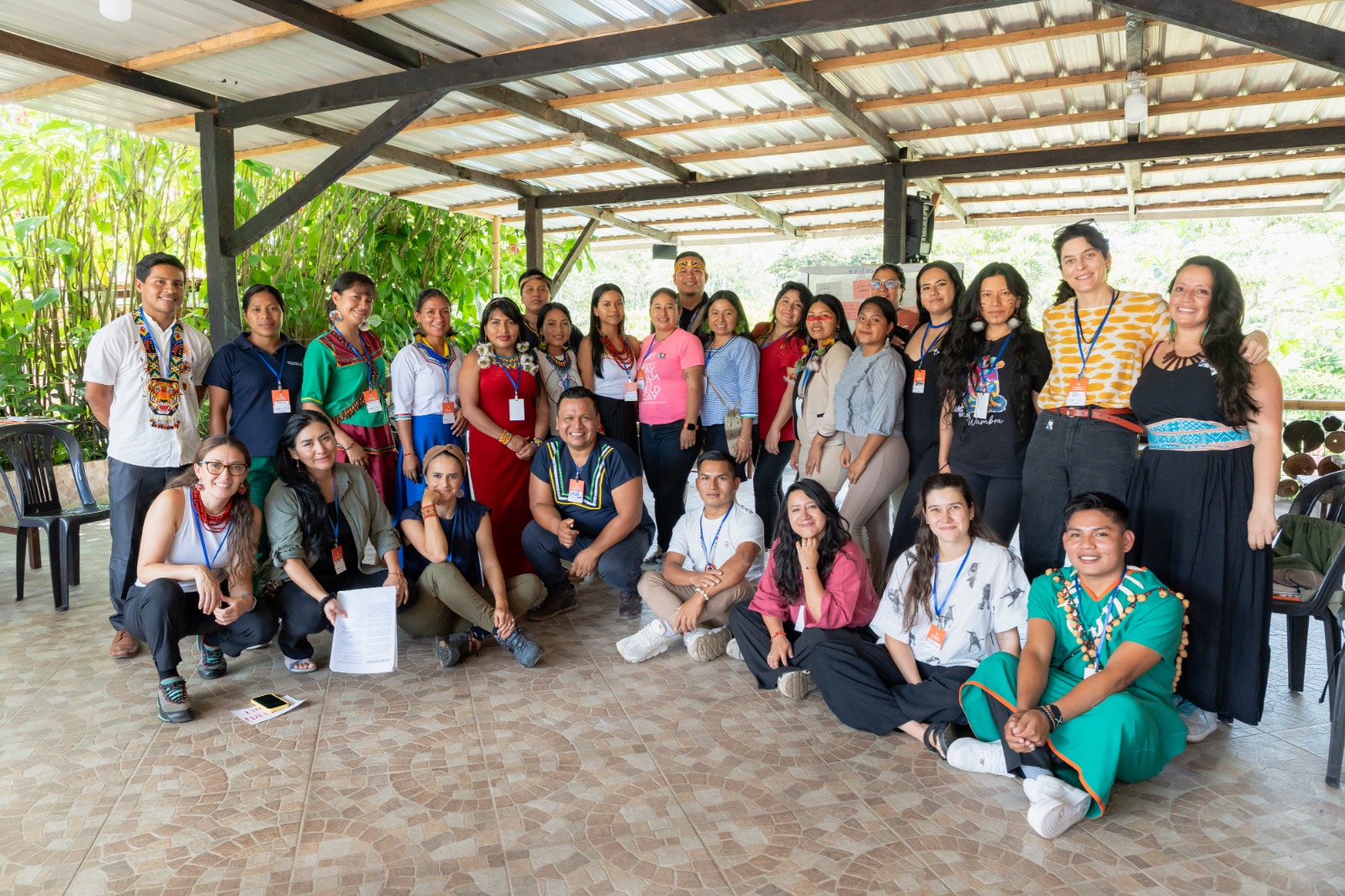
Recognizing the historic opportunity that COP30—set to take place this November in Brazil—represents for the protection of the Amazon and the recognition of the fundamental role of Indigenous Peoples, around twenty young leaders from various Amazonian nationalities of Ecuador participated in the Climate Leadership School. “Desde las raíces: negociación climática impulsada por los pueblos indígenas”This initiative—led by WWF Ecuador, Fundación Pachamama, the Amazon Sacred Headwaters Alliance, the Amazon Living School (EVA), Transforma, and Climate Action Network Latin America (CANLA)—sought to strengthen the informed, meaningful, and influential participation of Indigenous youth in international climate governance spaces, while promoting respect for and integration of their ancestral knowledge and traditional wisdom.
From July 15 to 18, the young participants took part in the in-person phase of the School, which included theoretical and practical sessions on climate science, multilateral governance, advocacy strategies, and mock negotiations in preparation for COP30. This training not only aims to empower a new generation of youth leaders, but is also framed within the commitment of the Living School of the Amazon (EVA) to promote ongoing capacity-building processes for Indigenous youth defending their territories and the climate.
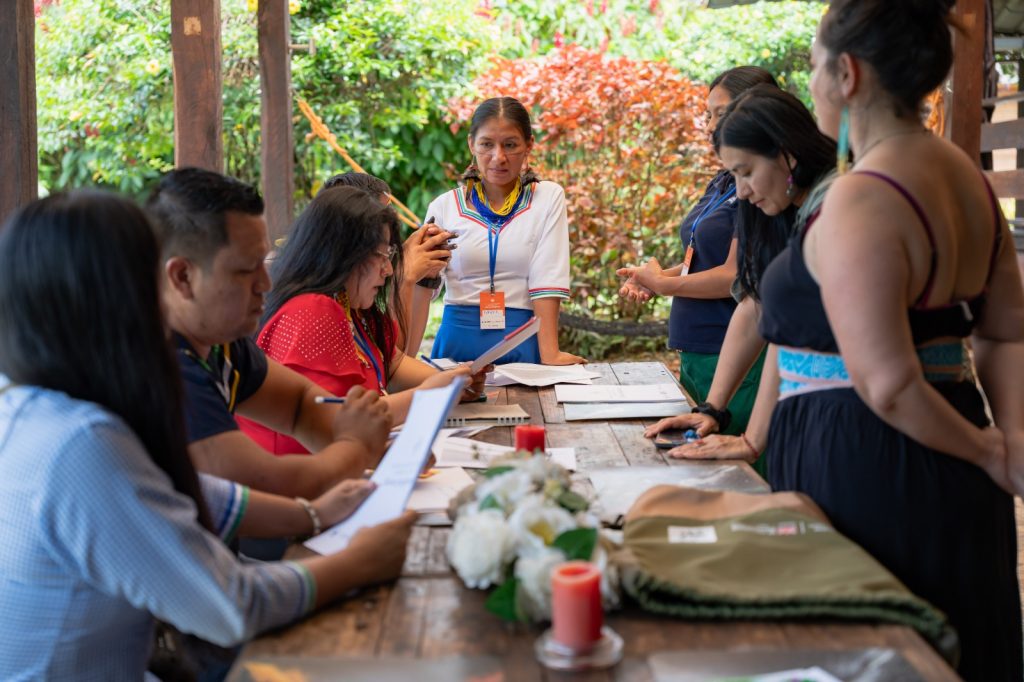
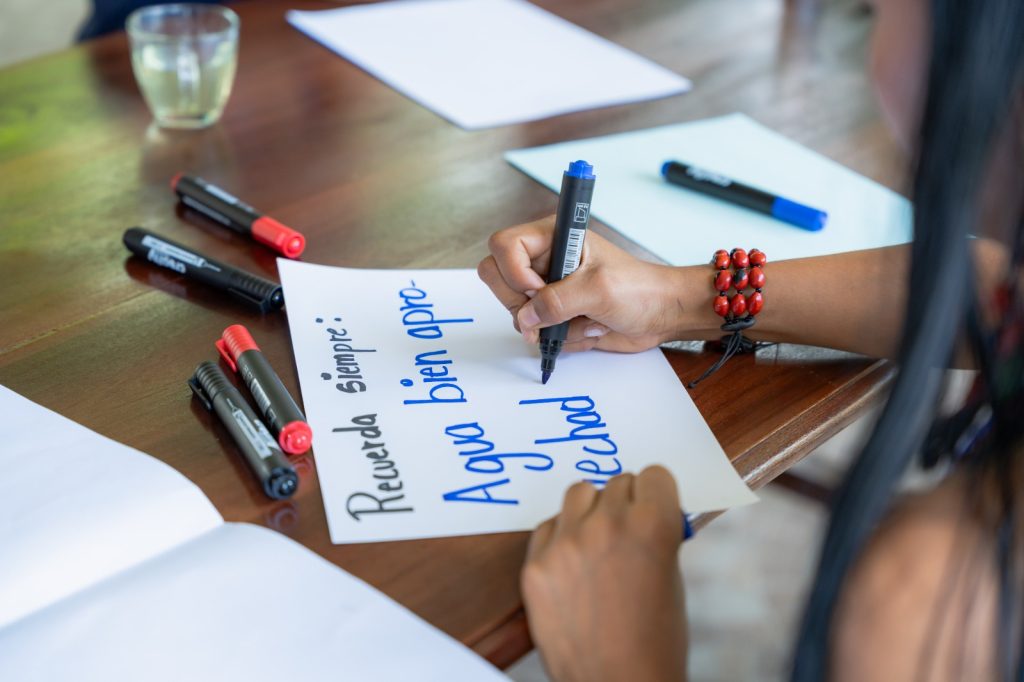
During the four days of training, the sessions were grounded in the participants’ agroecological calendars to facilitate ownership of the content—particularly the practical and theoretical exercises on adaptation—thereby strengthening engagement with the Global Goal on Adaptation (GGA), currently under discussion within the framework of the United Nations Climate Change Conference (COP30). Throughout the program, guided exchanges and dialogues also addressed climate justice, the Means of Implementation (MOI), the inclusion of Indigenous Peoples, and the core pillars of climate action, including loss and damage.
"A clear message to youth: we must be present and actively engaging in advocacy. Even though these spaces can be restrictive, it is essential that young voices are heard. Just as we demand that the voices of Indigenous Peoples be listened to, youth voices can also drive change. We are the present and the future of the Amazon—and indeed of the world—because we will become the leaders and representatives of our organizations.”
Said Kelvin Criollo, Youth Leader of the Indigenous Siona Nationality Organization of Ecuador (ONISE) and intern with the Amazon Sacred Headwaters Alliance.
“The strength of this approach lies in its ability to allow participants to rehearse real negotiation scenarios, practice strategic interventions, and formulate proposals from their own autonomous perspective—one that is oriented toward advancing solutions with nature and communities at the center.”, indicó María Inés Rivadeneira – Gerente de Políticas y Gobernanza de WWF Ecuador. “We designed a living methodology, woven from the territories and for the territories. We began with Indigenous Peoples’ own ways of learning—such as the ecological calendar, the guayusada, and collective storytelling—and interlaced them with tools from global climate diplomacy. In doing so, we ensured that complex concepts resonated within their own realities, and that international negotiations ceased to feel distant, becoming instead a lived, political, and strategic experience.” said Maritza Florián, Deputy for Climate Diplomacy at Transforma.
The training process will continue through December 2025 via a virtual accompaniment phase that includes in-depth thematic lectures, workshops with key stakeholders, including negotiators, and advanced simulation sessions, aimed at further strengthening participants’ preparation for engagement in national and international climate negotiation spaces.
The Climate Leadership School sets an important precedent in the country by bringing together technical training, hands-on climate negotiation practice, and Indigenous worldview within a single learning space. This process reaffirms the commitment of the organizations driving this initiative to climate justice, gender equity, and the leadership of Indigenous Peoples in building a sustainable future—from their territories and for the world.“The inclusion of Amazonian Indigenous Peoples in multilateral processes brings forward solutions and renewed perspectives to a discussion that urgently needs to be refreshed and re-energized in order to prevent a future defined by loss and damage resulting from the irresponsibility of major polluters. From the Amazon Sacred Headwaters, we will continue to elevate youth voices as key actors in the transition,” said Karla Maass Wolfenson, Advocacy Coordinator of the Amazon Sacred Headwaters Alliance.
📸 INPAR Estudio/WWF Ecuador