
By Segundo Chuquipiondo
As the road dissolves into dirt and dust, leaving behind the last stretch of pavement between Bagua Chica and Santa María de Nieva, a comment from the driver lingers both as a warning and a summary: “This is the only route… that’s why illegal miners and drug traffickers also use it.” The journey toward the native community of Soledad is not just a physical path; it is an X-ray of the conflicts experienced by Amazonian communities in 21st-century Peru.
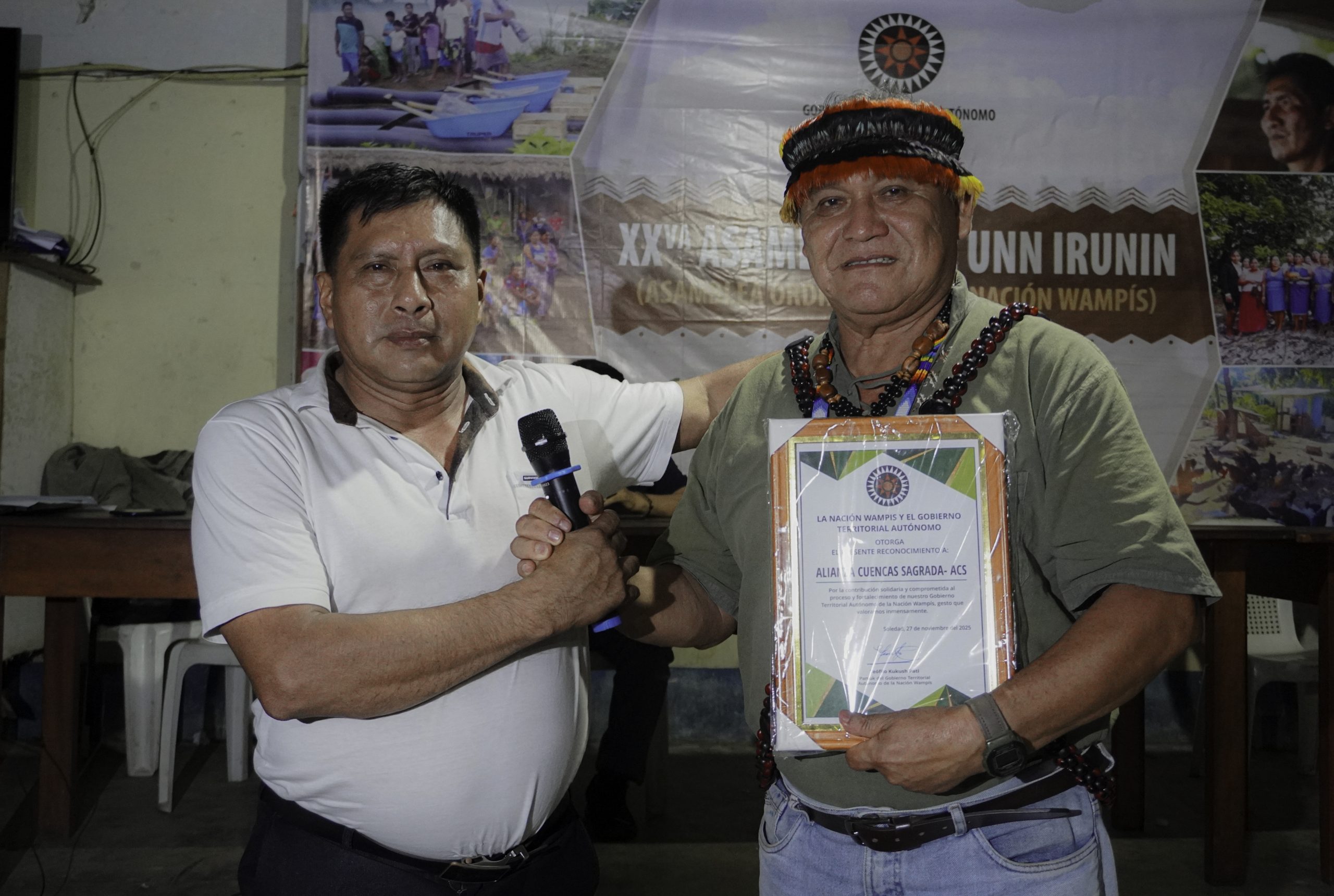
From there, the trip continues along the Santiago River, Kanus, as its inhabitants call it, where the Wampis Nation celebrates ten years of a unique political experiment in Latin America: an autonomous Indigenous government with its own institutions and a structure that blends ancestral law, territorial planning, and organized resistance. In this setting, the Autonomous Territorial Government of the Wampis Nation (GTANW) has granted recognition to the Amazon Sacred Headwaters Alliance for it's support in strengthening this model.
A decade that reshaped Indigenous politics in Peru
When the GTANW was created in 2015, it seemed like an improbable challenge for Peruvian politics: collectively governing more than 1.3 million hectares in the Amazon, without seeking secession, but insisting on the right to determine their own future. Ten years later, their experience is being studied in European and North American universities and closely followed by international organizations such as Rainforest Foundation, Tenure Facility, WWF, Terra Nova, and Land Rights Now.
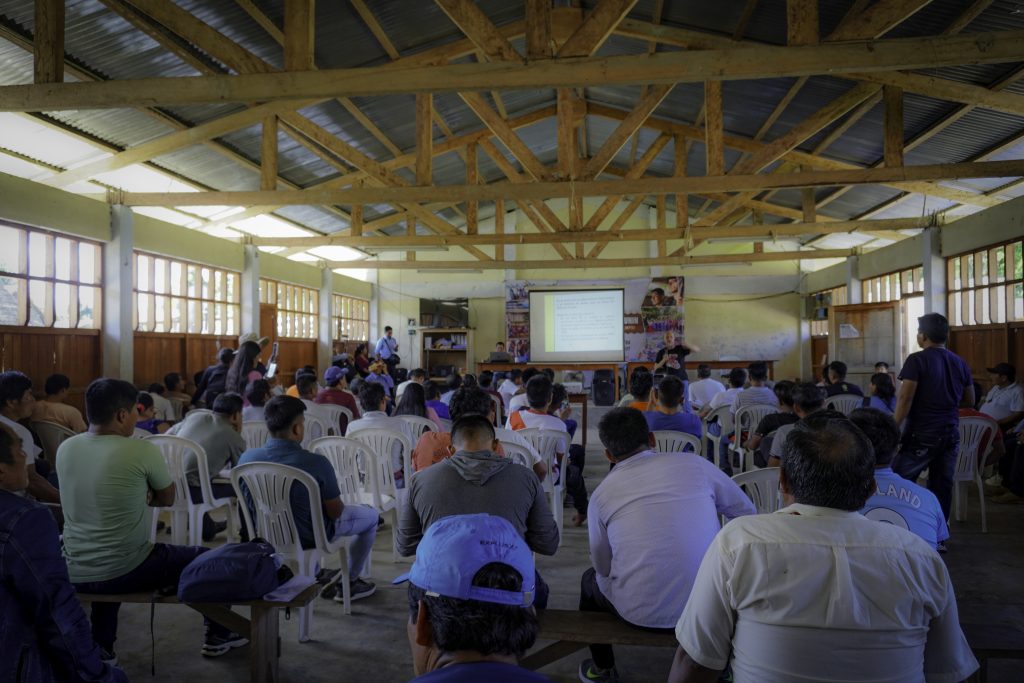
During the XX Ordinary Assembly, held November 27–30, the Wampis not only reviewed their institutional memory from the first decade; they also honored Wrays Pérez, vice president of the Amazon Sacred Headwaters Alliance and the first Pamuk (chief) of the Wampis Nation, for his political vision in founding this autonomy.
The Charip: a self-defense system born from siege

Along the river route to Soledad, the control posts of the Charip system appear like silent guardians. This Indigenous self-defense body emerged in the community of Villa Gonzalo when illegal mining arrived with heavy machinery, mercury dumped into rivers, and armed men. That threat triggered an internal reorganization that is now a central component of the GTANW.
“This system is essential for maintaining control over a threatened territory,” explains René Santiago, president of CHARIP. Three surveillance points operate along the Santiago River. At one of them, a guard stops the boat with a firm gesture: ancestral spear in one hand, binoculars in the other. He asks for names, destinations, reasons for travel. It is not an act of force; it is an act of survival.
Autonomy, not separation
Wampis leaders are clear in distancing their project from any separatist intent. “We are not asking to separate from Peru, but to coexist within a framework of mutual respect,” says Galois Flores Pizango. Their aim is not to build a parallel state, but to create a space where their institutions can engage, and, when needed, confront, the Peruvian government.
During the Assembly, a documentary on the history of the Charip was screened, progress on the Wampis Justice Code, a hybrid system combining customary norms with contemporary principles, was reviewed, and the performance of the Río Santiago municipal government was evaluated. The session concluded with recognitions to various institutions and Indigenous and non-Indigenous allies.
A challenging lesson for the country
From deep within their territory, the Wampis experience presents a truth that unsettles central authorities: while the Peruvian state faces increasing difficulty in stopping deforestation, illegal mining, and drug trafficking, Indigenous communities demonstrate that, with tools and support, they can protect millions of hectares with an effectiveness that surpasses public policy.
The recognition granted to the Amazon Sacred Headwaters Alliance is not a ceremonial gesture; it is the affirmation of an alliance that understands the Amazon as a living and global system. What is happening here is not merely a local chapter, but a tangible response to the planet’s environmental crisis.
Ten years on, the Wampis Nation raises a message that crosses borders:
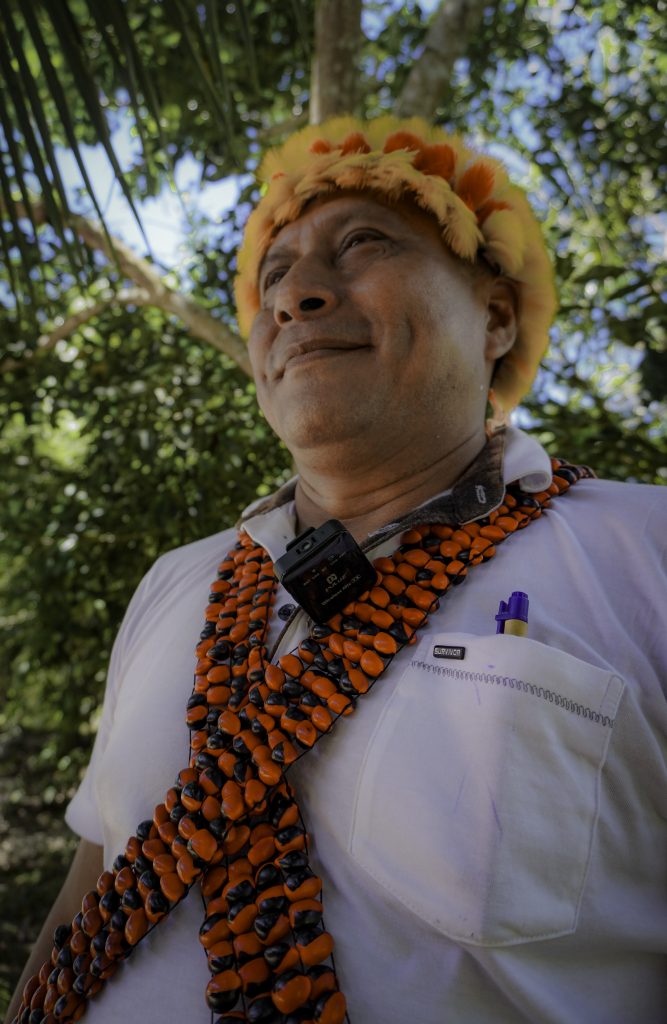
“We are still here. We protect. We decide.” said Teófilo Kukush Pati at the close of the assembly.